 BetaGist Top News Around The Globe
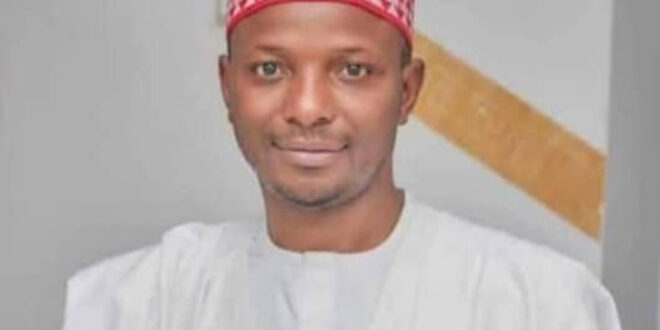
The nomination of Mustapha Rabiu Musa Kwankwaso as the Nigerian Democratic Congress, NDC, deputy governorship candidate for the 2027 election in Kano State has triggered intense political debate over merit, legacy, and the ideological direction of the Kwankwasiyya movement.
On Monday, the party announced Mustapha Kwankwaso, the first son of its vice-presidential candidate, Rabiu Musa Kwankwaso, as running mate to governorship candidate, Aminu Abdussalam Gwarzo. Prior to his nomination, Mustapha served as Commissioner for Youths and Sports Development in Kano State under Governor Abba Kabir Yusuf.
The development has since divided opinion across political circles and social media, with supporters defending the decision as a recognition of youth capacity, while critics raise concerns about political succession.
Vice-President of the Nigerian Political Science Association (NPSA), Prof. Murtala Muhammad, in an exclusive interview with DAILY POST said the controversy reflects deeper questions about the identity and future of the Kwankwasiyya movement, which has long been associated with populism, inclusion, and grassroots empowerment.
He said the debate is not about legality but perception and political symbolism.
“The challenge now is one of political perception. Supporters who have defended Kwankwasiyya as a movement of the common people may struggle to reconcile that narrative with a decision that appears to favour lineage over broader competition among qualified party loyalists,” he said.
He argued that the office of deputy governor demands significant administrative competence, political maturity and experience, particularly in a state like Kano.
“The office of deputy governor is a strategic position that requires administrative competence, political maturity, crisis-management skills and the ability to navigate complex governmental and party structures,” he said.
Muhammad also stressed that Kano’s status as Northern Nigeria’s political nerve centre and one of the country’s leading commercial hubs makes leadership experience even more critical.
He noted that many critics believe there are experienced politicians within the Kwankwasiyya movement with stronger records of public service and party organisation who could have been considered for the position.
“Whether this perception is accurate or not, it has become a major element of the public debate,” he observed.
Muhammad added that the implications could extend beyond the 2027 election
“Political opponents are already likely to portray the nomination as evidence of a shift from a mass-based populist movement to a more personalized political structure,” he stated.
“Politics is judged not only by achievements but also by symbols. The enduring appeal of Kwankwaso has been his association with the aspirations of ordinary citizens and the belief that leadership should be accessible to all. Whether this nomination strengthens or weakens that legacy remains to be seen,” Prof. Muhammad added.
Similarly, veteran journalist and publisher of Daily Nigerian, Jaafar Jaafar, also criticised the nomination, describing the deputy governorship position as too sensitive to be determined without adequate consideration of competence and experience.
In a Facebook post Jaafar wrote “The office of deputy governor is not something to be taken lightly. If, God forbid, a governor dies in office, the deputy governor is sworn in to take over. It is a position that has been occupied by experienced individuals such as BB Faruk, Audu Dawakin Tofa, Wada Abubakar, Professor Hafiz Abubakar, and others,” he wrote.
He further argued that the nomination contradicts the values associated with the Kwankwasiyya movement. “In all honesty, selecting Mustapha as deputy governor goes against the core principles of the Kwankwasiyya movement,” he stated.
Jaafar also questioned Mustapha’s preparedness for the role, insisting that there is no basis for comparing him with other experienced political figures within the movement.
“It is not my intention to disparage Mustapha, but anyone who knows him knows that he is not qualified for this highly important office,” he added.
He added that the nominee had not been entrusted with significant responsibilities even in personal or business matters linked to Kwankwaso.
“Even Kwankwaso himself has never entrusted Mustapha with managing any of his business ventures… yet today he is being considered for a position that could require him to manage the resources and welfare of millions of people,” he stated.
However, supporters of the nomination argue that the criticism overlooks the importance of youth inclusion in governance.
Hassan Garba Baraya, a political comentator defended the nomination, saying experience alone should not determine suitability for public office.
He said, in translated remarks made on his Facebook page in Hausa, “Even individuals with strong capacity and experience, such as Engineer Mu’azu Magaji (Dan Sarauniya), were previously removed from office by former Governor Ganduje over alleged poor performance and inexperience. Meanwhile, despite concerns raised about capacity, individuals like Murtala Garo were given significant responsibilities within the same administration.”
According to him, these examples show that leadership opportunities often produce unexpected results when young people are given responsibility.
Baraya added that he fully supports Mustapha Kwankwaso’s nomination, insisting that he has not seen any task beyond his capability.
He further argued that opposition to the nomination is driven by bias, maintaining that Mustapha’s energy and leadership potential make him suitable for the role.
Another supporter, Salees Abubakar Gwammaja, said although he is generally opposed to nepotism in politics, he does not see the nomination as inappropriate within the current political realities.
“Despite the fact that I am totally not in support of nepotism in politics, but in an ideal situation I didn’t see any wrong with ogah for anointing his biological son, Mustapha kwankwaso as a running mate…” he wrote.
He added that political appointments are sometimes used to reward loyalty and recognise contributions within political movements.
“Kwankwaso recently pushed for the sons of two deceased House of Assembly members to be given the tickets to contest for their parents seats out of regard for their loyalty. This is the definition of Kwankwasiyya,” he said.